
When Is a Perimeter Air Monitoring Plan Required?
Updated: Aug 14

Summary: A Perimeter Air Monitoring Plan (PAM Plan) is generally needed when construction, demolition, excavation, or remediation activities could generate dust, vapor, or odors capable of affecting nearby off-site receptors. This guide explains the practical factors that drive PAMP applicability and how real-time monitoring helps project teams manage conditions at the project boundary.
Project teams often ask when a perimeter air monitoring plan is required. The practical answer depends on whether planned work could generate airborne dust, vapors, or odors that may move beyond the jurisdiction's work area and affect nearby off-site receptors. Key considerations include the type and duration of the work, known or suspected contaminants, site history, construction methods, prevailing site conditions, and the proximity of homes, schools, offices, parks, or other public spaces. Some jurisdictions also establish specific PAM Plan requirements for remediation activities, while other projects warrant monitoring based on professional judgment and risk management.
A well-designed PAM Plan focuses on the project boundary because that is where site activity could begin to affect surrounding properties. At AirLogics, our in-house team can prepare PAM Plans for clients and provide real-time monitoring systems to help project teams track changing perimeter conditions, receive timely alerts, and document field data that can support operational decisions, community communication, and regulatory compliance.
What Factors Drive PAMP Applicability?
PAMP applicability is typically driven by the combination of emission-generating activities and potential exposure pathways. Soil disturbance, excavation, demolition, grading, contaminated material handling, and remedial construction can all create fugitive dust, vapors, or odors if controls and monitoring are not properly planned.
Nearby receptors are equally important. Residential neighborhoods, schools, hospitals, businesses, parks, and public gathering areas can increase the need for perimeter monitoring, especially when work will occur over multiple days or in areas with known contamination. The closer and more sensitive the receptors, the stronger the case for a formal PAM Plan.
The conceptual site model (CSM) ties these factors together by identifying contaminant sources, airborne exposure pathways, work areas, and receptor locations. A strong CSM helps determine whether monitoring is needed, where stations should be placed, what parameters should be measured, and how response levels should be used during the project.
Understanding Perimeter Air Monitoring Plan Requirements
Every project has different conditions, so perimeter air monitoring plan requirements should reflect the actual site instead of relying on a standard template. Monitoring locations, measured parameters, alert levels, and reporting methods should all match project needs.
Some projects include PAMP applicability because site conditions indicate that perimeter monitoring will provide valuable information during field activities. Other projects may involve a discretionary PAMP requirement, meaning monitoring is selected as a practical precaution based on professional judgment rather than a fixed requirement.
This approach allows monitoring plans to remain flexible while still protecting nearby off-site receptors. Good planning also makes it easier to adjust monitoring locations if site activities move from one area to another during different project phases.
Real-Time Information Helps Teams Respond Faster
Air conditions can change throughout the day as site activities move from one location to another. Continuous monitoring allows site managers to see these changes immediately instead of waiting for laboratory reports. This improves decision-making because current site conditions are always available.
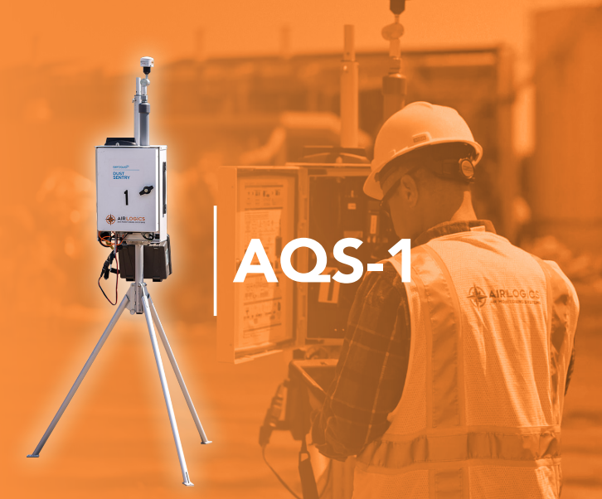
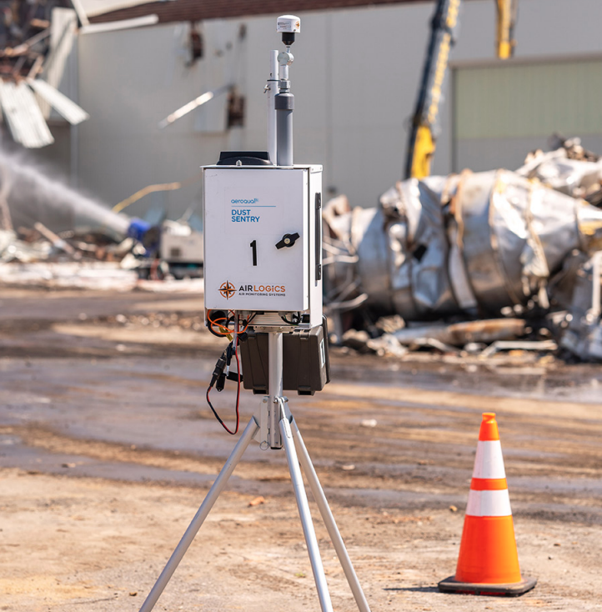
At AirLogics, our real-time air monitoring systems transmit information directly through our mobile application. Project teams can review readings remotely, receive alerts, and monitor conditions without visiting every monitoring station. This simple process helps keep everyone informed while the project continues.
Because our equipment is installed around the project boundary, it focuses on measuring conditions that may reach off-site receptors. This monitoring approach supports better communication with nearby property owners and helps reduce concerns by providing objective field data throughout the project.
Closing Note:
At AirLogics, our goal is to provide dependable monitoring support that fits the needs of construction, demolition, excavation, and remediation projects. In addition to equipment setup, user training, technical support, and mobile application access, AirLogics has in-house capabilities to prepare PAM Plans tailored to site-specific conditions, project activities, contaminants of concern, monitoring objectives, and nearby off-site receptors. Our systems are commonly rented for project-based monitoring and returned after work is complete, making them a practical option for many projects. The information collected can also support documentation prepared alongside a remedial action workplan (RAW) and complement a complete perimeter monitoring system strategy.
If your next project requires a PAM Plan or dependable real-time air monitoring around the project boundary, contact AirLogics today. Our team can help develop the monitoring plan, select the right monitoring configuration for your site, and support collection of reliable field data so surrounding areas can be monitored with confidence.
FAQs:
1. What is a perimeter air monitoring plan?
A perimeter air monitoring plan outlines monitoring locations, measured parameters, and response actions. At AirLogics, we help configure monitoring systems that match each project's conditions.
2. Why is perimeter air monitoring important?
Perimeter monitoring tracks dust and VOC movement near project boundaries, helping teams understand site conditions and reduce risk to nearby off-site receptors using reliable field data.
3. How does AirLogics support monitoring projects?
AirLogics provides in-house PAM Plan preparation, monitoring equipment, setup assistance, user training, mobile application access, technical support, and project-based equipment rentals for construction, demolition, excavation, and remediation activities.
4. What information helps create a monitoring plan?
Site activities, nearby receptors, conceptual site models, duration of project, expected dust or VOC movement, and project objectives all help determine an effective perimeter monitoring strategy.

Comments