
Can the AQS-1 Help Monitor Hydrogen Sulfide Conditions Around Waste Remediation Areas?
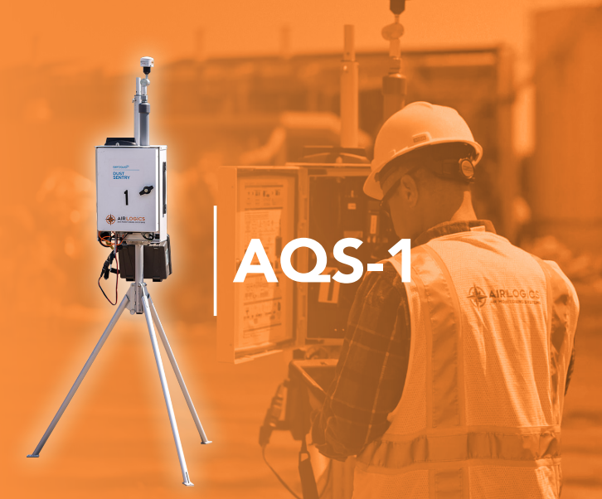
Summary: The AirLogics AQS-1 can monitor hydrogen sulfide (H₂S) when equipped with the appropriate sensor module. Effective monitoring requires the correct measurement range, calibration, placement, and real-time data settings to evaluate conditions at site boundaries and nearby receptors.
Hydrogen sulfide (H₂S) is a colorless gas with a strong rotten-egg odor that can form as organic matter decomposes. At some waste remediation sites, a suitable hydrogen sulfide detector can measure H₂S near work areas, site boundaries, and off-site receptors. The modular AirLogics AQS-1 can support this work when configured with the appropriate sensor.
Why H₂S Monitoring Matters at Remediation Sites
Remediation activities may disturb soil, water, or waste that releases H₂S. Concentrations can vary with site operations, weather, and airflow. Because odor does not reliably indicate concentration, boundary monitoring provides objective data to assess changing conditions near homes, businesses, and other off-site receptors.
Can the AQS-1 Measure Hydrogen Sulfide?
The AQS-1 is a portable, modular system that can measure total volatile organic compounds (VOCs), PM2.5, PM10, total suspended particulate matter (TSP), ozone, nitrogen dioxide, noise, and, when properly configured, H₂S. Because an H₂S sensor can be deployed in the system and is not included in every configuration, project teams should confirm module availability, measurement range, detection limits, and site suitability with AirLogics before deployment.
How a Suitable Gas Sensor Supports Monitoring
A hydrogen sulfide monitor must be selected for the expected concentration range and project objectives. The AQS-1 can combine an H2S gas detector with sensors for dust and other pollutants, but each module requires appropriate setup, maintenance, and calibration. Following the manufacturer’s guidance helps maintain data quality and identify sensor drift or other performance issues.
Choose Monitoring Points With Care
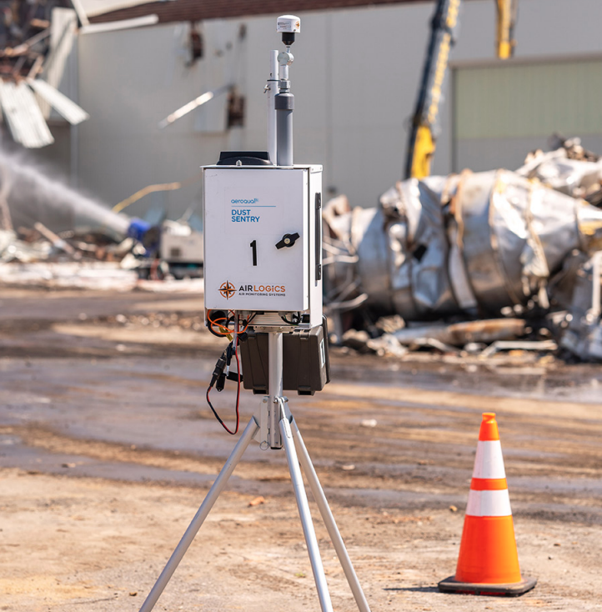
Monitor locations should reflect potential gas sources, site boundaries, nearby receptors, and prevailing airflow. Multiple stations may be needed where a site has several work areas or exposure pathways, and locations may need to change as work progresses. Readings can show spatial and temporal trends, but they do not identify a gas source by themselves.
Real-Time Data Helps Teams Respond
Remote access and alerts allow teams to review H₂S data as conditions change. Alert thresholds should match the project monitoring plan and the selected sensor’s capabilities. Results should be evaluated with site activities, weather, and other relevant information; an individual reading may warrant follow-up but does not establish a source on its own. Maintaining clear records supports evaluation of trends throughout remediation.
Ending Note:
AirLogics can help configure the AQS-1 for boundary and off-site monitoring, including confirming whether a suitable hydrogen sulphide gas sensor is available. Selection should consider expected concentrations, detection limits, calibration requirements, system compatibility, and data needs.
Planning a waste remediation project? Contact AirLogics to discuss an appropriate monitoring setup for your site.
FAQs:
1. What is hydrogen sulfide monitoring?
Hydrogen sulfide monitoring measures H₂S concentrations in air using a sensor selected for the required range and detection limits.
2. Can the AQS-1 measure hydrogen sulfide?
Yes, when equipped with a suitable H₂S module. AirLogics should confirm availability, measurement range, detection limits, and compatibility before deployment.
3. Why is hydrogen sulfide monitoring useful at waste remediation sites?
It provides objective data on changing gas levels near work areas, site boundaries, and nearby properties.
4. Where should hydrogen sulfide monitors be placed?
Placement should account for potential sources, site boundaries, nearby receptors, prevailing airflow, and changing work areas.
5. Why do hydrogen sulfide sensors need calibration?
Calibration supports measurement accuracy and helps identify sensor drift. Follow the manufacturer’s requirements for the selected module.


Comments