
How Can the AQS-1 Support Benzene Real-Time Monitoring Near Construction Site Boundaries?

Summary: The AQS-1 air monitoring system helps track total volatile organic compound (VOC) levels near construction site boundaries and surrounding properties. This blog explains how benzene real-time monitoring works, why monitor placement matters, and how VOC readings can reveal changes in air conditions. It also clarifies the limits of total VOC sensors and explains why benzene-specific testing requires a suitable measurement method.
Construction, excavation, and soil cleanup can disturb materials that contain volatile organic compounds (VOCs). Some sites may have a history of fuel spills or chemical releases that involve benzene. Benzene real-time monitoring requires a suitable method to assess changing air conditions near the site boundary. At AirLogics, our AQS-1 air monitoring system measures total VOC levels, helping project teams review changes near homes, businesses, and other off-site receptors. Its standard VOC sensor does not measure benzene as a separate compound, so the results must be understood correctly. This difference matters because the right monitoring method depends on the question a project needs to answer.
Why Monitor Air Near the Site Boundary?
Benzene is a volatile organic compound that can enter the air from certain fuels and contaminated materials. Excavation may disturb affected soil and change the amount of vapor released into the surrounding air. These changes can raise concerns for nearby residents, especially if homes or businesses are close to the project. Monitoring near the site boundary gives project teams a record of changing air conditions beyond the active work area. It can help identify rising VOC readings and show whether further investigation is needed. Smell alone cannot confirm the amount of benzene in the air. Measured data provides a clearer basis for reviewing possible off-site impacts.
A well-planned monitoring layout also helps show how air conditions vary from one side of a site to another. For example, a project beside a row of homes may need readings near the boundary closest to those properties. The location should reflect the site layout and the monitoring goal. Keeping a record of monitor locations and reading times makes it easier to compare results as excavation or cleanup work progresses.
What Does the AQS-1 Measure?
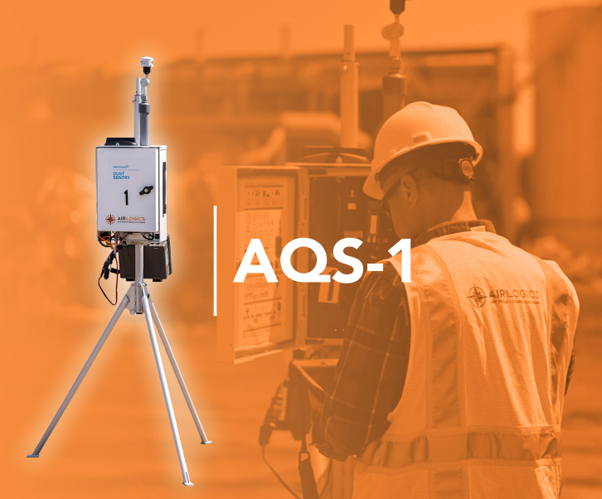
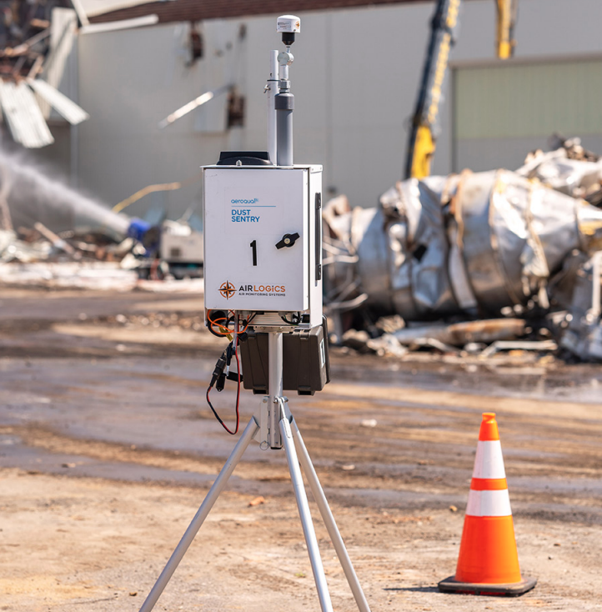
At AirLogics, we provide the AQS-1 as a portable, modular system for environmental air monitoring. Its available modules measure total VOCs, fine particles such as PM2.5, larger particles such as PM10, total suspended particles, ozone, nitrogen dioxide, and noise. The selected configuration depends on the project's monitoring needs. A unit only measures the parameters supported by its installed modules, so the setup should be confirmed before the project begins.
The AQS-1 uses a photoionization detector (PID) for total VOC measurement. This sensor responds to a range of VOCs, including benzene and toluene. However, its readings are quantitative for the compound used to calibrate the sensor, commonly isobutylene. A total VOC reading therefore cannot confirm the concentration of benzene alone. Projects that require a separate benzene result need a suitable compound-specific measurement method. Understanding this limit helps project teams select the right approach and avoid treating a general VOC reading as a direct benzene result.
How Can VOC Readings Help Identify Changes?
A series of readings can show changes that a single air sample might miss. For example, VOC levels may rise as excavation reaches soil with possible chemical contamination. Monitoring near the boundary can help identify that change and show whether further checks are needed. A change in the reading does not prove that excavation caused it. The result should be reviewed alongside site activity, monitor location, and other available information.
Our AQS-1 uses a pumped sampling system to draw air through its sensor module at a controlled flow. Its Automatic Baseline Correction adjusts the zero baseline every 60 seconds to help address sensor drift and cross-interference. These features support ongoing data collection, but all readings still require careful review and interpretation. Regular checks and suitable calibration help teams understand the data and recognize results that need closer attention.
Place Monitors Where Nearby Properties Matter
Monitor placement affects the value of the results. A site plan should show the excavation area, likely sources of VOCs, nearby buildings, and the boundary locations that need attention. The monitoring setup should match the suspected pollutants and the questions the project needs to answer. A monitor placed too far from the area of concern may not provide the information needed to assess conditions near a particular property.
At AirLogics, our perimeter monitoring approach focuses on possible off-site impacts. We help clients access suitable equipment through short-term rentals and provide training on its use. Our monitoring systems also connect with a mobile application, allowing users to review available readings and alerts. This helps project teams follow changes near selected boundary points and review concerns in a timely manner. As site activity moves to a new area, the monitoring plan should be reviewed to check whether the current locations remain suitable.
Choose the Right Method for Benzene Monitoring
Benzene monitoring begins with a clear understanding of the site history and the type of result required. If the goal is to track overall VOC changes near a construction boundary, the AQS-1 may be suitable with its VOC module. If the project needs a measured benzene concentration, a total VOC reading alone is not enough. The monitoring plan should specify a method capable of identifying benzene separately.
This distinction helps prevent incorrect conclusions and supports better decisions about further sampling. The project team should confirm the target compounds, sensor capabilities, and required level of detail before monitoring starts. AirLogics can help clients review their site monitoring needs and select an appropriate equipment setup based on the required measurements. Clear goals also make it easier to explain what the collected data shows and which questions still need further testing.
Ending Note:
Air monitoring near construction boundaries can provide useful information about changing VOC conditions and possible effects on surrounding properties. The AQS-1 supports total VOC monitoring, but benzene-specific results require a suitable measurement method. Testing for benzene exposure is a separate question from measuring total VOCs near a site boundary, and perimeter readings alone cannot determine an individual's exposure. The purpose of this monitoring is to assess air conditions near off-site receptors, not to make claims that the equipment cannot support.
Contact AirLogics to discuss your project location, monitoring goals, and equipment rental needs. Our team can help you review suitable options for monitoring air conditions near nearby homes, businesses, and other surrounding properties.
FAQs:
1. Why is air monitoring important near construction sites?
Air monitoring tracks changes in surrounding air conditions and helps project teams review potential off-site impacts near homes, businesses, and other nearby properties.
2. Can the AQS-1 measure benzene levels directly?
The AQS-1 standard PID module measures total VOCs, not benzene separately. A suitable compound-specific method is needed to determine benzene concentrations.
3. What is the purpose of perimeter air monitoring?
Perimeter air monitoring collects readings near selected site boundaries to help assess changing air conditions and identify results that may require further investigation.
4. How does monitor placement affect air monitoring results?
Monitor placement influences the readings collected. Locations should reflect site activities, potential emission sources, nearby properties, and the specific goals of the monitoring plan.
5. Can total VOC readings confirm individual benzene exposure?
No. Total VOC readings cannot establish benzene concentration or individual exposure. Suitable benzene-specific testing is needed to answer those questions.

Comments