
How Does the Dust Sentry Support a Perimeter Air Monitoring Plan for Demolition Projects?
Updated: 8 hours ago
Summary: The AirLogics Dust Sentry supports perimeter air monitoring at demolition sites by tracking dust, airborne particles, and selected air quality parameters. The article covers monitor placement, PM2.5, PM10, TSP, sensor features, calibration, and real-time data access. It also explains how site teams can review readings, assess conditions near nearby properties, and plan suitable monitoring based on project needs.
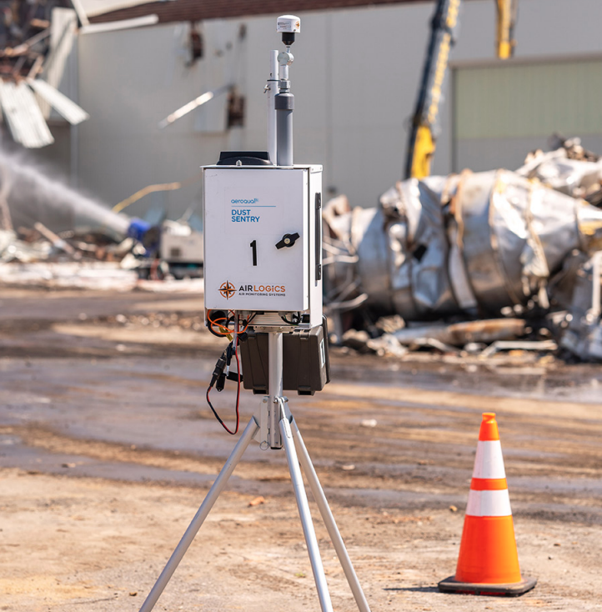
Demolition can release fine contaminant-laden dust that may travel beyond a project boundary. Nearby homes, shops, schools, and other properties may be affected by these contaminants. A well-designed perimeter air monitoring plan helps project teams track air quality near the site and identify rising particle levels in real time so adjustments in the work can be made to reduce impacts. The AirLogics Dust Sentry provides portable monitoring equipment that measures selected air quality parameters and helps teams understand conditions around demolition areas. By placing monitors at suitable points, teams can collect useful data as work moves from one stage to the next. This information helps them review changes in the air near the site and respond to readings that need attention.
Why Demolition Sites Need Boundary Monitoring
Breaking concrete, removing walls, and moving debris can release particles to the ambient air. Their movement in the air depends on site activity, wind direction, and wind speed. Visual checks alone may not show the full extent of the movement of released materials to the air. Fine dust can spread beyond the area where the work takes place, so it helps to measure air conditions at selected points outside the main work zone. Perimeter monitoring places instruments near the site boundary to track these changes. The readings help project teams see changes in dust levels beyond the work area. This information can support timely decisions and help reduce concerns from nearby residents.
What the Dust Sentry Measures During Demolition
The Dust Sentry is a portable, modular air monitoring system from AirLogics. It can measure PM2.5, PM10, total suspended particulate matter (TSP).It can also monitor noise if needed. PM2.5 refers to very fine particles, while PM10 covers particles up to a larger size range. TSP measures suspended particles across a broader range of sizes. These readings help teams understand changes in airborne particle levels during demolition work. The selected sensors should match the project's monitoring goals. Not every demolition site needs every available parameter. A suitable setup keeps the focus on the conditions that matter near surrounding properties.
Smart Placement Makes Monitoring More Useful
The location of each monitor affects the value of the data. Site layout, nearby homes, possible dust sources, and prevailing air movement can help guide placement. Monitoring points should be chosen to capture conditions at relevant boundaries and off site receptors. A good perimeter air monitoring plan also considers the stages of demolition. Building removal may create different dust patterns from debris loading or material handling. Teams can review monitoring locations as the work area changes. For example, the best place to measure dust during wall removal may differ from the best place during debris loading. The aim is to collect useful readings near the areas that may be affected, rather than placing equipment without a clear purpose. The number of units should depend on site size, layout, and monitoring needs.
How Dust Sentry Technology Supports Reliable Readings
The Dust Sentry uses a pumped sampling system to maintain airflow through its sensor modules. Filters help protect the sensors from airborne impurities. Its Automatic Baseline Correction checks and adjusts the zero baseline every 60 seconds to help address sensor drift and cross-interference. For particulate measurement, the system uses a advanced nephelometer and an inlet heater to help reduce humidity-related interference. Factory and field calibration support measurement quality over the course of a project. These features help teams collect consistent readings during active demolition. Teams should also check the equipment, follow setup instructions, and review readings as the project moves forward. Results still need to be reviewed in context, including site activity and the location of each monitoring point.
Real-Time Data Helps Teams Respond
A monitoring system becomes more useful if project teams can access its readings during the workday. The Dust Sentry supports real-time monitoring, allowing teams to identify changes and review them alongside current site activities. AirLogics also offers monitoring equipment with mobile access and alert capabilities. Suitable perimeter monitoring and detection devices can help teams spot rising readings near selected boundaries and decide whether further checks or changes to site practices are needed. For example, a rise in particle readings may prompt a closer look at nearby work, wind direction, or dust control methods. The readings provide information for review, but they do not by themselves prove where particles came from. Teams should consider site conditions before deciding on the next step.
Closing Note:
At AirLogics, our Dust Sentry monitoring system helps project teams track selected air quality parameters near demolition boundaries and understand potential impacts on off site receptors. We offer portable equipment with flexible power options, including battery, solar charging, and 110 volt power, along with rental options and training to support project needs. Our team can help you select a suitable perimeter monitoring system for your site, based on the project layout, the parameters you need to measure, and the areas around the boundary that require attention. Planning a demolition project? Contact AirLogics to discuss your monitoring needs and find a suitable setup for your site.
FAQs:
1. What is perimeter air monitoring at a demolition site?
Perimeter air monitoring tracks air quality near a site boundary. AirLogics equipment helps teams measure selected parameters and review changes that may affect nearby areas.
2. What air quality parameters can the Dust Sentry measure?
The AirLogics Dust Sentry can measure PM2.5, PM10 and TSP. Depending on the setup, it can also monitor ozone, nitrogen dioxide, and noise.
3. Where should air monitoring devices be placed during demolition?
Place monitors at suitable boundary points based on nearby properties, dust sources, site layout, and air movement. AirLogics can help assess project monitoring needs.
4. How does real-time air monitoring help demolition teams?
Real-time readings help teams spot changes in measured air quality. They can review the data alongside site activity and decide if further checks are needed.
5. Why is calibration important for perimeter monitoring equipment?
Calibration helps keep measurements reliable over time. The Dust Sentry supports factory and field calibration, while its baseline correction helps address sensor drift.


Comments