
How Does Industrial Air Quality Monitoring with Classic 2.0 Support Smarter Decisions?
Updated: Sep 22

Industrial operators need to balance a number of things in their operations, including production, efficiency, profitability, not to mention environmental compliance, sustainability, and being a good neighbor. To achieve this, operators need precise information and data on airborne compounds and particulate matter at their perimeter. AirLogics provides advanced industrial air quality monitoring with its Classic 2.0 system, delivering real-time, accurate data for smarter operational and regulatory decisions. Combining robust sensing technologies, Classic 2.0 enables teams to monitor VOCs, dust, and weather parameters instantly, supporting timely and informed action. With this system, industrial teams can prevent costly errors, maintain compliance, protect the environment and their communities, and maintain a clear understanding of the conditions at the perimeter of their facility at all times.
Real-Time VOC Detection for Accurate Operations
Classic 2.0 incorporates a field gas chromatograph (GC) capable of measuring compound-specific volatile organic compounds (VOCs). It contains a Photoionization detector (PID) that can operate in total VOC mode and then switch to automatically trigger the GC to perform compound-specific analysis for chemicals such as benzene, toluene, ethylbenzene, xylenes, chlorinated solvents, etc, when preset thresholds are exceeded. This real-time detection ensures operations respond quickly to chemical variations and maintain precise monitoring standards.
By providing immediate feedback on VOC concentrations, teams can adjust operational settings, optimize chemical handling, and minimize unwanted emissions. This level of monitoring reduces the risk of process interruptions and ensures industrial operations maintain consistent quality outputs. Moreover, the ability to identify specific compounds enhances decision-making when analyzing chemical processes, allowing targeted adjustments rather than generic responses.
Precision Dust and Particulate Measurement
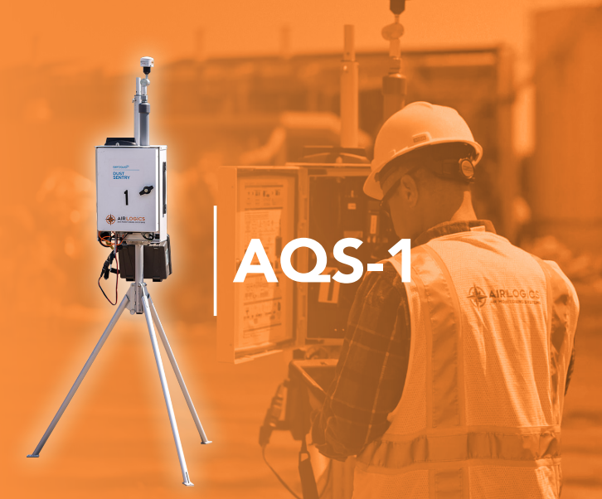
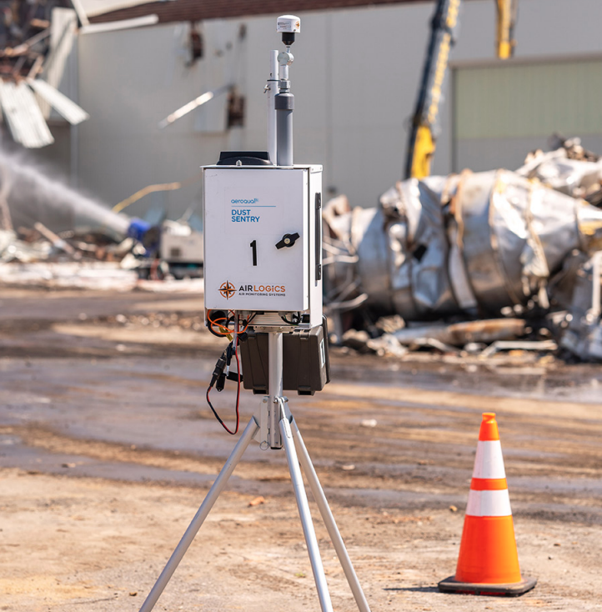
Dust levels are critical in industrial settings, and Classic 2.0’s high-resolution particulate meters provide instant readings. The system can monitor PM10 and PM2.5 to detect airborne particles. With real-time particulate measurement, teams can track trends, identify process-related spikes, and adjust operations efficiently to maintain consistent conditions.
This precise dust monitoring is particularly valuable in manufacturing or material handling environments where particulate levels at the perimeter of the property can become elevated very quickly by operations. Classic 2.0 allows continuous oversight of particulate fluctuations, enabling staff to identify issues before they escalate. Additionally, data from these meters can support long-term operational planning and inform maintenance schedules, preventing unexpected equipment wear or downtime.
Real-Time Fenceline Air Monitoring for Compliance
Classic 2.0 enables real-time fenceline air monitoring, offering continuous observation at site perimeters or key operational zones for compliance purposes. Alerts are triggered instantly when readings exceed set levels, allowing for immediate operational adjustments. This capability ensures teams maintain control over air quality parameters at the perimeter of the property without relying solely on intermittent sampling.
With real-time monitoring, industrial teams can quickly detect anomalies that may affect environmental compliance. Continuous observation ensures that no critical event goes unnoticed, and teams can use the data to refine processes, manage chemical handling, or adjust airflow systems within production facilities. It also simplifies reporting and documentation by providing clear records of environmental conditions at all times.
Integrated Meteorological Data for Operational Clarity
Understanding air movement is essential for process accuracy. Classic 2.0 includes an on-site meteorological sensors that measures wind speed, direction, rainfall, temperature, and relative humidity. A central system calculates running averages to determine air movement patterns. Integrating this meteorological data with VOC and particulate readings enables teams to interpret results accurately and adjust operations based on precise atmospheric conditions.
Wind and temperature fluctuations can impact the distribution of airborne compounds within industrial facilities. By linking meteorological data with air quality readings, Classic 2.0 ensures that teams can differentiate between changes caused by process variations and those influenced by airflow patterns. This level of insight allows for smarter decisions, improved safety margins, and better allocation of resources across monitoring points.
Data-Driven Industrial Management
By providing comprehensive air quality measurements, Classic 2.0 equips industrial teams with actionable intelligence for operational decisions. The system tracks trends in VOC and particulate concentrations, allowing for targeted adjustments in processes and preventive maintenance. Accurate, real-time data reduces uncertainty, supports compliance documentation, and enables proactive management of critical monitoring points.
Data collected by Classic 2.0 can be visualized and analyzed to identify patterns, evaluate efficiency improvements, and detect areas that require attention. By using this data strategically, teams can streamline production, reduce unnecessary operational interruptions, and make informed choices that improve both productivity and equipment longevity.
Wrap Up:
Classic 2.0 is highly effective for refinery or other industrial fenceline monitoring. It delivers continuous monitoring of both VOCs and particulate matter at perimeter locations, ensuring that industrial emissions are measured precisely. This combination of monitoring capabilities helps teams maintain operational control, evaluate process efficiency, and ensure equipment functions within set parameters. At AirLogics, we provide advanced solutions designed to give our clients confidence in their industrial operations. Our Classic 2.0 system reflects our commitment to delivering accurate, reliable, and real-time industrial air quality monitoring, helping businesses make smarter decisions, optimize processes, and maintain consistent operational performance. By choosing our solutions, you gain access to our expertise, technology, and ongoing support, ensuring your facility operates efficiently while keeping key air quality metrics under close observation.
Enhance your industrial operations with AirLogics Classic 2.0. Contact us today to implement advanced industrial air quality monitoring and leverage precise, real-time data to drive smarter operational decisions.
FAQs:
Q1: What is industrial air quality monitoring?
It involves measuring airborne compounds and particulates in industrial areas to support data-driven operational decisions.
Q2: How does Classic 2.0 measure VOCs?
It uses a PID and a portable field gas chromatograph to provide real-time compound-specific or total VOC analysis.
Q3: Can Classic 2.0 track particulate matter?
Yes, it monitors PM10, PM2.5, and total suspended particulate levels using infrared-based direct-reading meters.
Q4: What role does real-time fenceline air monitoring play?
It allows immediate insight into airborne conditions at facility boundaries for quick decision-making and operational control.
Q5: How does weather data enhance monitoring?
A5: Wind speed, direction, temperature, and humidity help identify sources and dispersion patterns of VOCs and particulates.

Comments